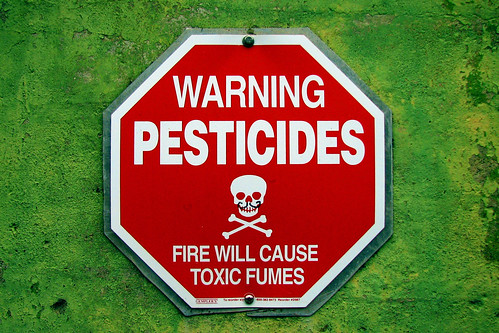
Hello again! I apologize for the hiatus. While I was away I continued to think about environmental justice issues and how overwhelming it can be processing all of the information on toxic chemicals in food, personal care products, household products and industrial products you come into contact with every day.
For instance, a recent University of Texas, at Austin study found that crib mattresses emit "high rates" of volatile organic compounds while infants sleep. That's enough to frighten any parent. So how do you balance all of this information? It can be very expensive to live a completely green life. Plus it can be very stressful to find all green products.
I've always believed that if you do what you can that you're ahead of the battle. Even if that means you can't afford to purchase an entirely off-the grid home built of recycled, non toxic materials. What do you think? How green can you be? How green should you be?
An environmental health blog. A place for information and tips on living a toxic-free lifestyle, and learning about environmental health issues.
Monday, April 21, 2014
Monday, March 24, 2014
The Importance of Soil Testing Before You Garden
It's that time of year when we all want to break the chains of winter and back out into nature. What many of us don't realize is that there may be danger lurking in our soil. If you live in a home that is older than 40 years old, if you live near a factory, and/or you don't know the land use records of the land before you moved in, it's very important to test your soil for toxic chemicals.
Recently, citizens of Tonawanda, NY found out that their soil was contained with elevated levels of the carcinogen Benzo[a]pyrene, or BaP. This BaP may have been released from the local Coke foundry plant (The Buffalo News, 2014).
So how do you test your soil?
Contact your local cooperative extension office: http://www.csrees.usda.gov/Extension/
Contact your local university's agriculture program to see if they offer soil testing services.
New York City Schools recommend that all schools test their garden soil every two years for heavy metals and nutrient levels. They also give instructions on how to collect the soil for test samples.
The good thing about county extension offices is that not only will they help you with soil testing, they will offer guidance on how to plant the best garden for your type of soil. So remember, test first, then garden.
Sources
Buffalo News
Testing Your Soil
Recently, citizens of Tonawanda, NY found out that their soil was contained with elevated levels of the carcinogen Benzo[a]pyrene, or BaP. This BaP may have been released from the local Coke foundry plant (The Buffalo News, 2014).
So how do you test your soil?
Image from http://aggie-turf.tamu.edu/aggieturf2/soilsample/images/soilsample.jpg
Contact your local cooperative extension office: http://www.csrees.usda.gov/Extension/
Contact your local university's agriculture program to see if they offer soil testing services.
New York City Schools recommend that all schools test their garden soil every two years for heavy metals and nutrient levels. They also give instructions on how to collect the soil for test samples.
The good thing about county extension offices is that not only will they help you with soil testing, they will offer guidance on how to plant the best garden for your type of soil. So remember, test first, then garden.
Sources
Buffalo News
Testing Your Soil
Monday, March 17, 2014
Autism and the Environment
A new meta-analysis study of 100 million US medical records from the University of Chicago links environmental pollution, such as pesticides, to autism and intellectual disability (ID). The researchers found that autism and ID were "correlated at the county level with incidences of genital malformations in newborn males," according to The Examiner. The researchers claim that autism is strongly correlated with the incidence of congenital genital malformation in males.
There are certain times during a pregnancy where the fetus is particularly sensitive to small molecule environmental pollutants, like pharmaceuticals and pesticides. Some of these molecules alter the normal development of the fetus, through unknown processes. The researchers studied genital malformations in females and males but found that the congenital malformation - autism link was much stronger in boys.
The study's main author is quick to point out that this study does not count out genetic and other factors for autism. Nor does it directly point to the environment as the cause for autism, but it does point to a strong argument for an environmental role.
Sources
University of Chicago
FoxNews
The Examiner
Photo credit: <a href="http://www.flickr.com/photos/cgpgrey/4889435516/">CGP Grey</a> via <a href="http://photopin.com">photopin</a> <a href="http://creativecommons.org/licenses/by/2.0/">cc</a>
There are certain times during a pregnancy where the fetus is particularly sensitive to small molecule environmental pollutants, like pharmaceuticals and pesticides. Some of these molecules alter the normal development of the fetus, through unknown processes. The researchers studied genital malformations in females and males but found that the congenital malformation - autism link was much stronger in boys.
The study's main author is quick to point out that this study does not count out genetic and other factors for autism. Nor does it directly point to the environment as the cause for autism, but it does point to a strong argument for an environmental role.
Sources
University of Chicago
FoxNews
The Examiner
An analysis of 100 million U.S. medical records reveals that autism and intellectual disability (ID) rates are correlated at the county level with incidence of genital malformations in newborn males, an indicator of possible congenital exposure to harmful environmental factors such as pesticides. - See more at: http://news.uchicago.edu/article/2014/03/13/autism-and-intellectual-disability-incidence-linked-environmental-factors#sthash.iqZzther.dpuf
An analysis of 100 million U.S. medical records reveals that autism and intellectual disability (ID) rates are correlated at the county level with incidence of genital malformations in newborn males, an indicator of possible congenital exposure to harmful environmental factors such as pesticides. - See more at: http://news.uchicago.edu/article/2014/03/13/autism-and-intellectual-disability-incidence-linked-environmental-factors#sthash.iqZzther.dpufAn analysis of 100 million U.S. medical records reveals that autism and intellectual disability (ID) rates are correlated at the county level with incidence of genital malformations in newborn males, an indicator of possible congenital exposure to harmful environmental factors such as pesticides. - See more at: http://news.uchicago.edu/article/2014/03/13/autism-and-intellectual-disability-incidence-linked-environmental-factors#sthash.iqZzther.dpuf
100 million U.S. medical records
100 million U.S. medical recordfrom the University of Chicago links
Monday, March 10, 2014
Cadmium in children's toys
We've often heard of lead in children's toys, but we also need to be concerned about cadmium. Cadmium is a metal that can be found in children's products, including clothing accessories, jewelry, and the paint on the surfaces and linings of toys. Outside of children's products, it can be found in batteries, metal coatings, industrial paints, tobacco smoke, and as a stabilizers in plastics.
Sources
NCSL
SAFER States
ECOWATCH
Khaleej Times
Image taken from http://ecowatch.com/2013/08/08/childrens-toys-toxic-cadmium/
Cadmium is used as an alternative to lead. It's cheaper, but it's also toxic. Cadmium exposure has been linked to kidney and bone damage, and delayed brain development in children. Cadmium has also been labelled a "known human carcinogen." Children are of particular concern because they put toys, jewelry and other products in their mouths.
In 2011, the U.S. Congress, limited the amount of cadmium that can be used in toys and there is a voluntary industrial standard on the amount of cadmium that can be used in jewelry. However, critics claim this is not enough, as some products still contain hazardous levels of cadmium. Six states and the European Union have put Cadmium bans into place for certain products. The states are CA, CT, IL, MD, MN and WA.
Sources
NCSL
SAFER States
ECOWATCH
Khaleej Times
Monday, March 3, 2014
BPA & Brain Development
We already know bisphenol A (BPA) as an endocrine disruptor, carcinogen, and obesogen, but now it has been linked to altered brain and central nervous system (CNS) development prenatally. BPA mimics estrogen and can be found in many everyday products, like the linings of metal cans, receipts, and even in our foods and drinks. BPA is banned in the European Union and Canada, but not the United States.
When neurons, or nerve cells, are growing, they rely on a local chloride levels to guide them to their correct location in the brain. Exposure to BPA disrupts this process.
In a new study by Dr. Wolfgang Liedtke and colleagues at Duke University found that;
In Liedtke and colleague's study of rodent models, that was also "verified in human systems," both sexes were affected by BPA disruption, but females tended to be more susceptible to BPA's attack. Researchers proposed that this processes of BPA attack on cell development may hold clues on the development on autism and Rett syndrome. Fortunately, in rodents, the effects were reversible when treated with a drug that allowed the neurons to compensate for the excessive chloride levels. This study is just another reason for tougher regulation and bans on BPA in the US.
Sources
Time Magazine
CBS News
Duke Alert
Science Daily
When neurons, or nerve cells, are growing, they rely on a local chloride levels to guide them to their correct location in the brain. Exposure to BPA disrupts this process.
"Over time, as the neurons mature, chloride is pumped out of the cells by a chloride transporter called KCC2. If chloride levels remain high, the neural circuits don’t form and connect properly."
In a new study by Dr. Wolfgang Liedtke and colleagues at Duke University found that;
"when exposing the neurons to minute amounts of BPA, the gene that makes KCC2 shut down, which kept chloride longer in the neurons. They suspect the BPA made a different type of protein -- known as MECP2 -- more abundant in neurons, which in turn bound to KCC2 and shut it down."
Credit: Michele Yeo, Duke Medicine
In Liedtke and colleague's study of rodent models, that was also "verified in human systems," both sexes were affected by BPA disruption, but females tended to be more susceptible to BPA's attack. Researchers proposed that this processes of BPA attack on cell development may hold clues on the development on autism and Rett syndrome. Fortunately, in rodents, the effects were reversible when treated with a drug that allowed the neurons to compensate for the excessive chloride levels. This study is just another reason for tougher regulation and bans on BPA in the US.
Sources
Time Magazine
CBS News
Duke Alert
Science Daily
Friday, February 28, 2014
Label Check: Sodium Laureth Sulfate.
This is the latest in my Label Check series in which I examine a chemical or ingredient in depth. Today I am looking at Sodium Laureth Sulfate (SLES). It is a surfactant used as a foaming agent, as people often incorrectly believe that more foam equal more cleaning power.
Image take from http://www.mylifeasanesthetician.com
You can find SLES in toothpastes, shower gels, bubble bath, soaps, facial cleansers, and detergents. It's an inexpensive ingredient, so manufacturers like to use it to keep costs down. SLES can cause eye irritation and can be contaminated with the carcinogen 1-4 dioxane and ethylene oxide, which is a carcinogen, along with being a reproductive/development toxicant, and immunotoxicant.
While SLES is thought to be milder than Sodium Lauryl Sulfate (SLS), there are still concerns.
Sources:
Tuesday, February 25, 2014
Green Chemistry: What is it and why do we need it?
While we may be used to traditional chemistry creating both many of the products we use everyday and the toxins we face everyday, we may not be familiar with green chemistry. According to the EPA, green chemistry "is the design of chemical products and processes that reduce or eliminate the generation of hazardous substances."
Photo taken from EPA
Green chemistry is presenting opportunities not only for a cleaner environment, but also for increased business opportunities and savings. A 2011, Pike Research report stated that by the year 2020, green chemistry will save industry $65.5 billion in liability for social and environmental costs. The same report stated that in terms of market opportunity, green chemistry will represent $98.5 billion in market opportunity by 2020.
One green chemist is already seizing the opportunity. Chemical engineering professor Richard Wool of the University of Delaware uses environmentally-friendly products like flaxseed, chicken feathers and vegetable oil to make a variety a products, including car parts, tape, shoes and roofing materials.
Colleges and universities around the world are also now focuses efforts on green chemistry. The American Chemical Society, not to be confused with the toxic lobbying group the American Chemistry Council, even provides research grants for green chemistry. Green chemistry allows for continued progress without continued detriment to public and environmental health.
Subscribe to:
Posts (Atom)