Showing posts with label label check. Show all posts

Friday, February 28, 2014

Label Check: Sodium Laureth Sulfate.

This is the latest in my Label Check series in which I examine a chemical or ingredient in depth. Today I am looking at Sodium Laureth Sulfate (SLES).  It is a surfactant used as a foaming agent, as people often incorrectly believe that more foam equal more cleaning power. 


You can find SLES in toothpastes, shower gels, bubble bath, soaps, facial cleansers, and detergents. It's an inexpensive ingredient, so manufacturers like to use it to keep costs down.  SLES can cause eye irritation and can be contaminated with the carcinogen 1-4 dioxane and ethylene oxide, which is a carcinogen, along with being a reproductive/development toxicant, and immunotoxicant.
While SLES is thought to be milder than Sodium Lauryl Sulfate (SLS), there are still concerns. 

Sources: 


Tuesday, February 18, 2014

Label Check: Petrolatum

This is the 5th installment in my Label Check series, in which I examine a chemical in depth.

Like its name suggests, petrolatum is created from petroleum or crude oil. It's a semisolid mixture of hydrocarbons used as a skin or hair conditioner,  skin protectant, and machinery lubricant. It also absorbs UV rays. One of the most famous petrolatum products is probably petroleum jelly, in petrolatum is the main ingredient. For years, doctors have suggested parents use petrolatum to cure diaper rash for their babies.


Source: http://www.toysrus.com/graphics/product_images/pTRU1-7551287dt.jpg

Petrolatum was originally found at the bottom of oil rigs in the 1800s. However, during refining, all of the carcinogenic products may not be removed. While the brand Vaseline is generally regarded as non-toxic, other brands may not be as trustworthy. 
 
Petrolatum also blocks the pores of your skin. It keeps your skin "moisturized," because it blocks water from being able to escape from your skin. It creates an illusion of moisturization, while really blocking air and water from reaching your skin. The thick barrier of petrolatum also blocks in any dirt on your skin, making it more difficult to clean. 
 
According to the Huffington Post:  
"People suffering from skin conditions like acne and rosacea should stay away from petroleum jelly altogether, since such thick emollients can aggravate those conditions. Those who rub Vaseline on dry, cracked noses to get through a cold might want to think twice, too: If petroleum jelly gets into the lungs, it can cause lipid pneumonia. It won't happen if you apply it once in a while, but Dr. Dattner recommends not making a daily habit of it."
Instead of using Petrolatum, use more natural moisturizers.  I sell Ava Anderson Products and use them myself.


Friday, February 14, 2014

Label Check: PEGs

This is the 4th installment in my Label Check series, in which I examine a toxic ingredient in depth.
PEGs (polyethylene glycol) is a petroleum-based product that has many uses and applications, from laxatives, to medicinal solvents and lubricants, and eye drops. PEGs can also be found in skin creams, toothpastes, and personal lubricants.  PEGs dissolve grease and oil. So by dissolving our skin's natural oils, they make our skin more vulnerable to other toxins. The structure of polyethylene glycol is below. The "n" denotes the number of repeating units.


Image from http://upload.wikimedia.org/wikipedia/commons/4/42/Polyethylene_glycol.png

According to Truth in Aging:

"In cosmetics, PEGs function in three ways: as emollients (which help soften and lubricate the skin), as emulsifiers (which help water-based and oil-based ingredients mix properly), and as vehicles that help deliver other ingredients deeper into the skin."

There are multiple forms of PEGs. In labels, you will see the letters PEG often followed by a number.  The number tells the molecular weight. PEGs with a lower molecular weight can penetrate the skin more easily.  For example, PEG-8 has a lower molecular weight than PEG-100.

You also often see PEGs on the label as PEG-2 stearate. The stearate shows that the compound polyethylene (plastic) + glycol (alcohol) attached to a stearic acid molecule. Stearic acid, is a naturally occurring fatty acid, often from vegetable oil.

According to the Skin Deep Database, polyethylene glycol, may be contaminated with the carcinogens 1-4 dioxane and ethylene oxide. Consider this with PEGs skin penetrating properties.

Skin irritation due to PEGs will depend on the condition of your skin. Again from Truth in Aging: 

"To note, independent of molecular size, PEGs of all sizes may penetrate through injured skin with compromised barrier function. So it is very important to avoid products with PEGs if your skin is not in tip top condition.

This penetration enhancing effect is important for three reasons: 1) If your skin care product contains a bunch of other undesirable ingredients, PEGs will make it easier for them to get down deep into your skin. 2) By altering the surface tension of the skin, PEGs may upset the natural moisture balance. 3) PEGs are not always pure, but often come contaminated with a host of toxic impurities."
Check labels carefully to avoid products with PEGs, especially if you skin has any cuts, abrasions or openings. 

Monday, February 10, 2014

Label Check: Mineral Oil

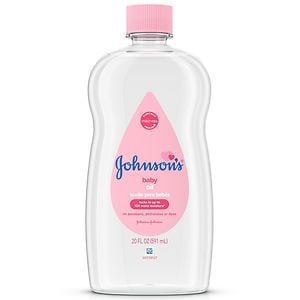
This is the 3rd in my Label Check series, in which I examine a label ingredient in depth. Here I will examine mineral oil.  Mineral oil is the name given to any various colorless, odorless mixtures of petroleum products. Baby oil is simply mineral oil that has been given a fragrance.
Image from drugstore.com

Mineral oil, in it's various forms, has many uses, including as a laxative, a moisturizer, a medication for diaper rash, furniture polish, air freshener and toilet bowl cleaner. It can be found in makeup, pesticides, pharmaceuticals, and as lubricants for car engines and heavy machinery, just to name a few.

According to the Skin Deep Database, the adverse health effects of exposure to mineral oil include, possible immune system toxicity or possible allergen status. Some carcinogenic concern for aerosolized mineral oil products, and toxicity for non-reproductive organs.  According to the website Livestrong adverse health effects include, vitamin deficiencies, lung damage, birth defects, brain embolism, and gastrointestinal problems.

If you are looking for an alternative to mineral oil, you might want to try plant-based essential oils.

Wednesday, February 5, 2014

Label Check: Phthalates

Phthalates (pronounced thalates) are a class of chemicals used to soften vinyl and plastics. They also act as dyes, adhesives and solvents. They can be found in fragrances, cosmetics, lotions, food packaging, plastic wrap, vinyl toys, wallpaper, pharmaceuticals, shower curtains, medical tubing, insecticides, and nail polish, just to name a few. Phthalates are capable of off-gasing, becoming gaseous and entering the air we breathe and have been found in indoor air and dust.


The health effects of exposure to phthalates may include lower sperm counts, endocrine disruption,  cancer, and negative impacts on the developing male reproductive system. Phthalate metabolites have also been detected in the urine of women with breast cancer (Breast Cancer Fund).
"A 2012 study examined whether or not there is a relationship between urinary levels of nine different phthalates and the incidence of breast cancer. In this study, urinary phthalate metabolites were detected in 82 percent of the women, whether or not they had been diagnosed with breast cancer. Monoethyl phthalate (MEP), a urinary metabolite of the parent compound diethyl phthalate (DEP; often used in fragrance), was elevated in women with breast cancer. This association was most profound in pre-menopausal women. Metabolites of two other common phthalates (butyl benzyl phthalate, BBP; and di-n-octyl phthalate, DOP) were negatively associated with breast cancer risk in this study (Lopez-Carrillo, 2010)."
How can you avoid phthalates? The folks are Safer Chemicals Healthy Families have provided some excellent tips! 
"1. There’s no sure-fire way to completely avoid phthalates until Congress passes legislation that will require chemical manufacturers to demonstrate that their products are safe before they end up in our lotions, dashboards, and bodies.
Until then...
2. Skip the fragrance when choosing cosmetics, personal care products, cleaning products, detergents, and air fresheners. Manufacturers aren’t required to list phthalates on the label, but any item listed as “fragrance” is often a chemical mixture that can contain phthalates.
3. When buying cosmetics, purchase from companies that have pledged not to use phthalates.
4. Check the Healthy Toys database for toys bought before 2009 - they may contain phthalates.
5. Avoid buying plastics that may be treated with phthalates, including vinyl toys, shower curtains, and gloves. Look out for "PVC," "V" or the "3" recycling code on the item or its packaging.
6. If you have vinyl flooring in your home, damp mop regularly since phthalates bind to dust on the floor. Direct sunlight on vinyl tiles causes them to release phthalates more quickly, so put lower blinds on windows that shine directly on flooring."

Source: Tox Town

Happy label reading!

Monday, February 3, 2014

Label Check: Parabens

This is the first in my Label Check series, in which I focus on one chemical or class of chemicals. Today I'll focus on parabens, antimicrobial preservatives found in cosmetics (including baby products), deodorants, foods, and pharmaceuticals. 


Parabens are absorbed through the digestive system, skin and blood. Parabens are estrogenic endocrine disruptors that bind to estrogen receptors.

"They also increase the expression of many genes that are usually regulated by the natural estrogen estradiol and cause human breast tumor cells (MCF-7 cells) to grow and proliferate in vitro (Byford, 2002; Pugazhendhi, 2007)"
Meaning, that outside of the body, in tissue samples, parabens increased human breast cancer cell growth.  A small 2004 study of 20 women in the UK found intact (un-metabolized) parabens in breast tumors, although this study did not establish a cause-effect relationship between parabens and breast cancer. Some people disregard this 20-person study because it did not take into account normal paraben tissue amounts.


Parabens can also act as toxins to the reproductive system. Studies in animals have shown that dietary exposure to parabens lead to  decreased daily sperm production and decreased serum testosterone production in male mice.
Parabens have also been linked to neurotoxicity, immunotoxicity and  skin irritation.

You can avoid labels by looking for "paraben-free" products. Happy label reading!