Showing posts with label fenceline communities. Show all posts

Friday, January 24, 2014

More Toxic Chemicals to Avoid and the Need to Real Reform

Here is an image from the website It's a Harleyyy Life that shows succinctly shows 30 toxic chemicals to avoid and their health effects. Many we have already gone over, but I like the presentation of this graph and it may be a good printout for your home or shopping list.

Here is another image from Women's Voices for the Earth.


As you can see, by removing toxic chemicals, we could avoid many costly health issues. However, our health system is based on treatment, not prevention and current laws are not strong enough to regulate these chemicals off of the market. While Ava Anderson offers non toxic products and I am proud to be a consultant, I am also a believer in the need for real legislative reform.

Currently, there is a bill called the Chemical Safety Improvement Act (CSIA) in the Senate and in Committee in the House that has the backing of the Chemicals Industry (The American Chemistry Council). CSIA does not allow states to ban or take action on chemicals they determine to be dangerous. It does not protect hotspot/fenceline communities. It does not protect pregnant women, children, or other vulnerable populations, and it places more bureaucracy in place at the EPA, delaying any action they could take on toxic chemicals by 5-8 years. 

That's why I support the group Safer Chemicals Healthy Families. They work in DC and they work in collaboration with groups around the United States to lobby Congress, and push for real legislation reform to protect our families and ALL populations.

Monday, January 20, 2014

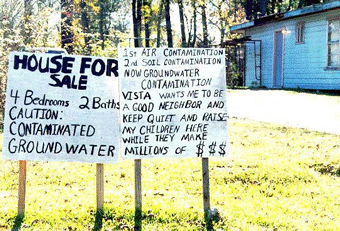
Health based on where you live: Fenceline Communities.

Although we are all exposed to the over 80,000 chemicals that have been created since the modern chemistry era, some are more exposed than others. Across the country and around the world, communities exist in close proximity to chemical factories, toxic waste dumps, landfills and other toxic sites. These are called fenceline communities, because often, a fence is all that separates their communities from the polluted land. Those who live in these communities are exposed to more toxic chemicals and suffer more adverse health effects than the rest of us. These communities also tend to be disproportionately minority and of lower economic classes.

One example of a fenceline community is Mossville, LA, also known as Cancer Alley. Mossville is predominantly African American community surrounded by 14 petrochemical plants.


The town has been ravaged by illness and it has been difficult for people to move since no one wants to move a town surrounded by factories.
"I got cancer. My dad had cancer. In fact, he died of cancer. It's a lot of people in this area who died of cancer," says Herman Singleton Jr., 51, who also lost two uncles and an aunt to cancer.
Another example is the small town of Savoonga on St. Lawrence, AK, in the Bering Strait, near Russia. The town is near an abandoned U.S. military base.
"When the military vacated Northeast Cape in the early 1970s, they left at least thirty-four contaminated sites in a nine-square-mile area. Contamination includes at least 220,000 gallons of spilt fuel, as well as heavy metals, asbestos, solvents, and PCBs which are known to cause cancer."
The town is still suffering the effects. In a village of 800, two babies were born without brains.
"As a result of these daily exposures to toxic chemicals, those of us who live in remote places like Alaska and the Arctic have some of the highest levels of toxic chemicals in our own bodies. On St. Lawrence Island we have very high levels of PCBs in our traditional foods and in our bodies, up to 10 times higher than average U.S. levels. Yupik women within the Yukon-Kuskokwim Delta area of Alaska have the highest levels of PBDEs -- toxic, flame-retardant chemicals -- in their blood. These chemicals have been linked to serious diseases such as cancer, diabetes, learning disabilities, birth defects and reproductive harm. People in my community are being harmed by all these diseases. Last year, we lost 19 people from cancer in a community of about 1,200."


"“We are tired of our communities being ‘sacrifice zones’ or ‘kill zones,’ ” Ms. Roberts added.


Ms. Roberts was referring to what the environmental injustice movement refers to as “the disproportionate” pollution burden borne by communities of color and poorer White communities, often located near freeways, power plants, toxic waste sites, oil refineries, rail yards, chemical plants and other major sources of pollution."
No one should have to live like this. In the battle against toxic chemicals, we can't forget our brothers and sisters in fenceline communities around the globe.